
Mechanical and quartz watch movements
A watch movement is the engine that advances the hands or the digital display. Mechanical movements keep time with a sprung balance and a gear train. Quartz movements keep time with a battery and a quartz crystal. Knowing the type helps you describe a watch. It does not, by itself, set a price.
Last updated September 5, 2026
Key takeaways
- The movement is the timekeeping engine inside the case.
- Manual and automatic watches are both mechanical.
- Quartz watches use a battery and a quartz crystal.
- Whether a watch runs is a fact we note at the counter.
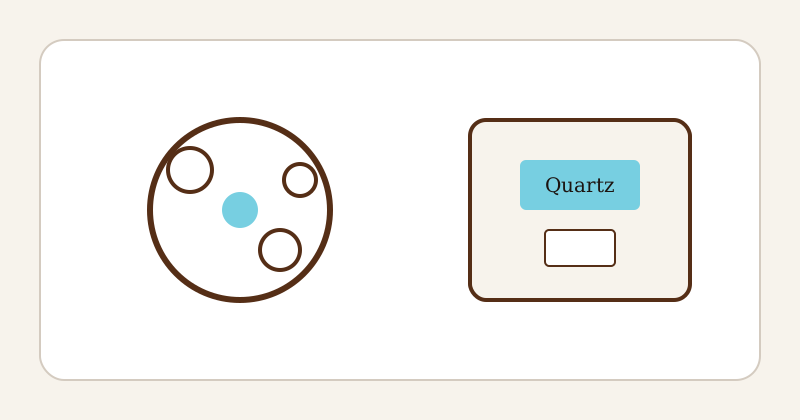
What a movement is
The case, dial, and bracelet are what you see. The movement is the set of parts that measure time. Watchmakers call a specific movement design a caliber. You do not need the caliber number to tell mechanical from quartz.
Mechanical movements
Manual wind
A manual mechanical watch stores energy in a mainspring that you wind with the crown. If it sits unworn, it stops. Many pocket watches are manual. A stopped manual watch is not automatically broken. It may only need winding, cleaning, or a repair visit.
Automatic
An automatic mechanical watch also uses a mainspring and a balance. A rotor winds the spring as the watch moves on a wrist. Sitting still for a few days can let it stop. That is expected behavior, not a quartz battery issue.
Quartz movements
A quartz movement uses a battery (or another cell) and a quartz crystal that oscillates at a steady rate. Many quartz watches have a seconds hand that steps once per second. Some are digital. A dead cell is a common reason a quartz watch stops. Changing a cell is not the same job as servicing a mechanical movement.
Other signals you can see
A case back may say Automatic, Quartz, or Shock Resistant. Those words are clues, not a full service record. A sweep seconds hand often (not always) points to mechanical. A ticking seconds hand often points to quartz. The safe check is to bring the watch in rather than pry the case open at home.
What we look for
We look at the maker, whether the watch runs, and the metal of the case at the counter. A pocket watch and a wrist watch are both sorted in front of you. The movement type, when we can see it, is part of the explanation. We do not open a case back in a way that damages the watch just to name the caliber.
Related visits
Sell watches and Watch repair.
Next step: more Learn articles, or contact the shop.